


* {
margin: 0;
padding: 0;
box-sizing: border-box;
}
body {
font-family: 'Segoe UI', Roboto, system-ui, -apple-system, sans-serif;
background-color: #f8fafc;
color: #1e293b;
line-height: 1.7;
padding: 2rem 1rem;
display: flex;
justify-content: center;
}
.container {
max-width: 880px;
width: 100.0%;
background: #ffffff;
padding: 2.5rem 2.8rem;
border-radius: 16px;
box-shadow: 0 8px 30px rgba(0, 0, 0, 0.06);
}
h1 {
font-size: 2.1rem;
font-weight: 600;
letter-spacing: -0.02em;
border-bottom: 3px solid #2563eb;
padding-bottom: 0.5rem;
margin-bottom: 1.2rem;
color: #0b1e3a;
}
h2 {
font-size: 1.5rem;
font-weight: 600;
margin-top: 2rem;
margin-bottom: 0.75rem;
color: #1e3a6f;
border-left: 4px solid #2563eb;
padding-left: 0.8rem;
}
h3 {
font-size: 1.15rem;
font-weight: 600;
margin-top: 1.3rem;
margin-bottom: 0.4rem;
color: #1e3a6f;
}
p {
margin-bottom: 1rem;
}
ul,
ol {
margin: 0.75rem 0 1.2rem 1.8rem;
}
li {
margin-bottom: 0.3rem;
}
strong {
color: #0b2b4a;
font-weight: 600;
}
.note {
background: #f1f5f9;
border-left: 4px solid #64748b;
padding: 1rem 1.5rem;
margin: 1.8rem 0 0.2rem 0;
border-radius: 0 8px 8px 0;
font-size: 0.95rem;
}
.note strong {
color: #1e293b;
}
/* 编号列表中的子条目缩进 */
.sub-item {
margin-left: 1.5rem;
list-style-type: circle;
}
/* 标准引用 */
.std-list {
list-style-type: none;
margin-left: 0;
padding-left: 0;
}
.std-list li {
margin-bottom: 0.5rem;
padding-left: 1.2rem;
text-indent: -1.2rem;
}
.std-list li::before {
content: "▹";
color: #2563eb;
font-weight: bold;
margin-right: 0.5rem;
}
/* 响应式 */
@media (max-width: 600px) {
.container {
padding: 1.5rem 1.2rem;
}
h1 {
font-size: 1.7rem;
}
h2 {
font-size: 1.25rem;
}
}</style>
Introduction
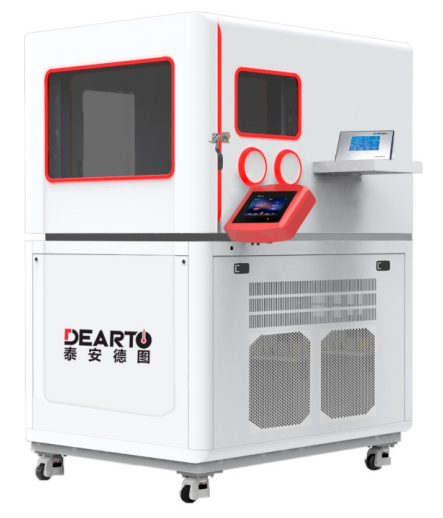
<!-- Introduction -->The number, layout, and setpoint selection of routine test points inside a temperature and humidity calibration chamber are strictly determined by its effective working volume. Adhering to these standardized configurations ensures measurement accuracy and compliance with national metrological specifications.
1. Number of Test Points
The total sensor count varies based on the chamber size:
- Effective Volume < 2 m³: Deploy 9 temperature sensors and 3 humidity sensors.
- Effective Volume > 2 m³: Deploy 15 temperature sensors and 4 humidity sensors.
2. Spatial Layout and Probe Placement
Proper positioning is critical to obtaining representative data:
- Temperature Probe Layout (for the 9‑point scheme): The sensors are distributed across three horizontal layers—upper, middle, and lower. Within each layer, they are placed at the left, center, and right positions, forming a uniform grid.
- Humidity Probe Layout: The humidity sensors are typically positioned at the geometric center of the upper, middle, and lower layers respectively.
Probe Installation Requirements
- All probes must be suspended in the air and must not touch the chamber walls, shelves, or any loaded objects.
- A minimum clearance of 100 mm from the inner chamber walls is required.
- Probes must be placed away from the air inlet and outlet vents to avoid direct airflow interference, which could skew readings.
3. Selection of Calibration Setpoints
Once the physical layout is established, the specific temperature and humidity values to be tested must be defined:
- Routine Approach: Select the lower limit, upper limit, and midpoint of the chamber's operational range. For instance, a typical test combination might include low, ambient, and high temperature points paired with low, medium, and high humidity levels.
- Flexible Adjustment: Alternatively, setpoints can be customized to match the most frequently used operating conditions in your actual application, ensuring the calibration reflects real‑world usage.
4. Applicable Technical Standards
The specifications outlined above are derived from the following national metrological and industry standards:
- JJF 1101-2019 – Calibration Specification for Temperature and Humidity Parameters of Environmental Testing Equipment (The most widely applied general standard for environmental chambers).
- JJG 205-2005 – Verification Regulation for Mechanical Thermo‑hygrometers (Specifies performance requirements for supporting calibration chambers).
- QX/T 16-2020 – Verification Chamber for Temperature and Humidity Instruments (A meteorological industry standard detailing specific probe placement and test point rules).
Note on Standard Compliance:
It is important to note that different standards may define slightly different point counts (e.g., JJG 205-2005 may require 9 humidity points in some cases). The configurations described above represent the conventional industry best practices for routine performance verification. For formal metrological verification, please always refer to the specific standard cited in your test report. Additionally, these configurations are typically performed under no‑load conditions; any load‑based testing should be clearly noted in the final documentation.
 Tel
Tel
 Product
 Contact
 Home
Home